A seminar in nature or in the city: which to choose?

When the time comes to book a venue, one question always returns: should you opt for a seminar in nature or a seminar in the city? Both formats have their supporters, and the right answer depends above all on the goals of your event. To help you decide, here is an honest comparison of the strengths and limits of each option, before looking at why a nature seminar often wins out when the main aim is team cohesion. Our concrete point of comparison: the Domaine du Dahu, in Sablons, in the Gironde, between Bordeaux and Périgueux — a privatisable natural estate less than 40 minutes from Bordeaux.
The strengths of a city seminar
Choosing a large city for a seminar is far from absurd, especially for certain event formats. The advantages are real and easy to identify:
- Accessibility: a well-connected city is reached by train, plane or car, which makes life easier for colleagues scattered across the country or internationally.
- Hotel services: business hotels, equipped conference rooms, integrated catering, corporate services — everything comes packaged and turnkey.
- Reduced logistics: no transport to organise between the airport and the venue, and plenty of providers used to professional events.
- The extras: restaurants, cultural life, the chance to extend the evening — the city offers a varied playground for free time.
For a national convention, a large annual gathering or a seminar that must host several hundred people, the city often remains the most rational choice.
The limits of a city seminar
There is a flip side, however, and it weighs heavily as soon as the goal touches the human side and team cohesion:
- Constant distractions: in the city, the team stays within reach of the office, urgent files and outside interruptions. True disconnection is rare.
- Anonymity: a business hotel shared with other groups, impersonal corridors, a meeting room identical to every other — it is hard to create a memorable event.
- Dispersal: everyone heads back to their own room, some go out to explore the city, and the group breaks up as soon as the working day ends.
- The hidden cost of the standard: packaged services leave little room for personalisation and a truly distinctive event.
In short, the city excels at logistical efficiency, but struggles to create that extra spark which turns a seminar into a shared memory.
The strengths of a seminar in nature
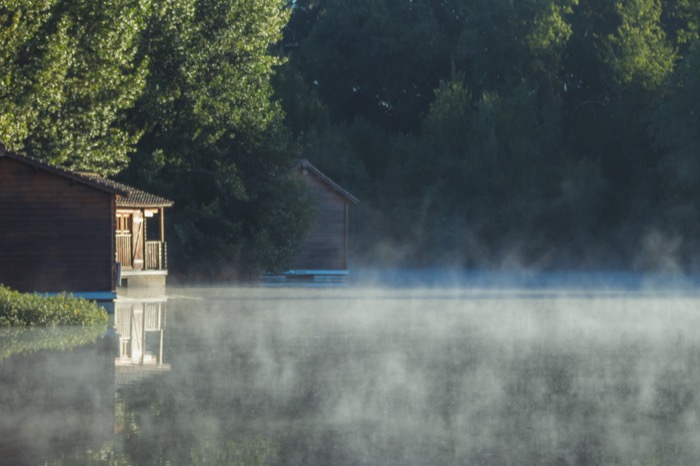
Conversely, the nature seminar relies on a change of scenery and a return to calm. Its strengths answer the limits of the city almost point by point:
- Disconnection: away from the open-plan office and urban noise, the team refocuses on what matters. Screens close, real conversations open up.
- Cohesion: sharing a meal, an activity by the lake or an evening under the stars builds bonds that ten video calls will never create.
- Exclusivity: a privatisable estate like the Domaine du Dahu is booked in its entirety — no other group on site, just your team in a setting entirely dedicated to it. Discover the conditions on the estate privatisation page.
- Creativity: calm and nature encourage perspective, fresh ideas and the informal exchanges that never happen in a corporate corridor.
The nature seminar also offers a residential setting: the team sleeps on site, meets again at breakfast and experiences the event as a continuum, from the first coffee to the last evening.
The limits of a seminar in nature
To stay honest, the nature seminar calls for a few trade-offs of its own. They need to be anticipated so they do not become obstacles:
- Transport to organise: a countryside estate means planning the team's travel. Nothing insurmountable, especially when the venue stays close to a large city: the Domaine du Dahu is less than 40 minutes from Bordeaux and very close to Libourne, easy to reach.
- Services to assemble: a natural estate is not a business hotel. At the Domaine du Dahu there is no equipped conference room and no on-site catering: the estate offers a setting suited to quiet work, and you build your seminar with local caterers and your own equipment.
- A format suited to small teams: an intimate estate welcomes human-scale groups — up to around 18 people at the Domaine du Dahu. For a convention of several hundred participants, the city remains more appropriate.
These limits quickly turn into advantages: building your stay also means personalising it entirely and rooting it in its region, far from the standardised seminar.
Which goals call for which option?
The real question is not "city or countryside" in the abstract, but "city or countryside, to do what". The choice becomes clear as soon as you list the goals of the event:
- Choose the city for a large convention, a high-headcount seminar, an event that must host many external speakers or rely on heavy conference infrastructure.
- Choose nature for a leadership seminar, a team kick-off, a cohesion day, a strategic seminar in the calm, or any moment where the human stake outweighs the logistics.
For small and medium teams — SMEs, start-ups, departments wanting to bring their group together — the nature seminar almost always answers the real need better. The organising a corporate retreat in nature near Bordeaux page sets out the steps to follow, and the group stay page gives an idea of the possible configurations for your headcount.
Why nature often wins for cohesion
If team cohesion is among your priorities, the nature seminar has a decisive advantage: it creates shared time. In the city, once the working day is over, the group disperses. In nature, on a privatised estate, the team stays together — and that continuum is what turns a seminar into a collective experience. Bonds are not forged during the meeting: they are forged around a barbecue, during a fishing session, on a walk by the water, or facing a starry sky.
Nature also acts as a leveller. Taken out of its hierarchical context, a team talks differently: barriers fall, conversations become franker, and personalities reveal themselves. A seminar in nature does not just bring colleagues together: it lets them genuinely meet.
The Domaine du Dahu, a seminar in nature near Bordeaux
The Domaine du Dahu is a fine illustration of this third way between the anonymous business hotel and the oversized seminar centre. In Sablons (33910), in the Gironde, less than 40 minutes from Bordeaux and less than 25 minutes from Saint-Émilion, the estate brings together everything that makes a successful nature seminar: a 3-hectare private lake, a charming guesthouse and floating chalets with no overlooking neighbours to house the team on site, and the option to privatise the whole place.
As for activities, the setting lends itself naturally to team building: no-kill fishing on the lake, wine tasting hosted by Thomas, paddleboarding (bring your own board, buoyancy aid mandatory, swimming not permitted), electric-bike rides, or a barbecue-boat cruise nearby. Teams keen on wine will find the details of the tasting experience on the wine tourism page. It is concrete proof that a seminar in nature can stay accessible, a stone's throw from a large city, without giving anything up on cohesion.
Conclusion: a choice guided by your goals
A seminar in nature or a seminar in the city — there is no wrong answer in the abstract; there is an answer suited to your event. The city wins on logistics and large formats. Nature wins on disconnection, exclusivity and, above all, team cohesion. For a small team that wants to live a genuine collective moment, a privatisable natural estate like the Domaine du Dahu offers the best of both worlds: a refreshing, memorable setting, less than 40 minutes from Bordeaux.
Tempted by a seminar in nature near Bordeaux?
Contact us for a tailored quote and to check the availability of the estate for exclusive hire for your team. We reply within 24 hours, with free cancellation up to 30 days before.
Request a seminar quote